


Island hopping made easy - ultimate Caribbean travel guide
Updated: Mar 10
Earlier I told you about the ultimate island adventure of our Caribbean cruise, now followed by this Caribbean islands travel guide. From Curaçao we went island hopping along the northeast Caribbean, in comfort and luxury, about which you can read more in my previous Caribbean Cruise blog.

This was our itinerary at a glance:
Day 1-2: Curaçao & sea day
Day 3: St.Kitts & Nevis
Day 4: Guadeloupe
Day 5: Martinique
Day 6: Antigua & Barbuda
Day 7: St.Maarten
Day 8: Tortola-British Virgin Islands
Day 9: Sea day
Day 10: Bonaire
Day 11: Back to Curaçao
In this blog, I will dive deep into this tropical cruise during which we visited 7 stunning islands in the Caribbean with ease. I will happily share more info and many of my own pictures about each of these islands, with plenty of practical tips for your own visit.

As you could have read in my previous blog, we departed on this affordable luxury Corendon.nl cruise from Curaçao and arrived a few days earlier already to enjoy the island before embarkation. Perfect for a relaxing start of the cruise.

Getting around on Curaçao is most convenient by car and we rented ours at Paradisus Car Rental.
This friendly company communicated clearly with us via mail and what’s app in advance and brought our car straight to the airport. Because of this we were on our way in just 30 minutes after getting off the plane.

They were super flexible and willing to drop off and pick up the car at any spot of our choosing. They even came to the cruise terminal to pick up the car just before we embarked the ship.
I highly recommend this car rental company as they proved to be reliable, communicate well in English and Spanish, are very easy-going and offer a big variety of cars for sharp prices!
For more tips on what to see and do on this lovely Caribbean island which I visited 4 times already, you can check my Curaçao travel guide or my top 28 restaurants guide.
Caribbean cruise island hopping adventure
Our all-inclusive adventure on the historic Renaissance ship felt like the perfect mix of relaxation and exploration, waking up to a new paradise every day without repacking. If you're dreaming of effortless island-hopping, this is the trip and blog for you!

Our cruise ship was intimate (max 1,200 passengers), with 5 restaurants, 2 pools, a Spa, gym, theatre shows, and live music. Nearly all meals and drinks were included, which was super convenient, without the crowds of mega-ships.
But the ultimate highlight of the cruise was the different island visits! How else can you visit 7 destinations in just 10 days, without the hassle and extra cost of flights or boat transfers?

Ultimate Caribbean islands travel guide
Here’s the full itinerary recap with my personal highlights, many useful must-know tips, pictures and fun facts to inspire your own Caribbean trip.
St. Kitts & Nevis: historic charm & scenic views
One of my favorite islands of this trip! We booked a 3-hour ship excursion (€45 p.p.) around St.Kitts, executed by a local tour company in small vans with A/C. They drove us past Basseterre's colorful Georgian architecture, Independence Square, and the Berkeley Memorial clock.
Our first stop was Palms Court Gardens, a historic spot with a lovely restaurant and hotel with pool that offers direct views of the harbor, surrounded by lush tropical gardens.

Next stop was the stunning Romney Manor, a former plantation house, owned by the ancestor of Thomas Jefferson (former US president), that now houses a batik center.
It’s surrounded by botanic gardens with a 350-year-old Saman tree. It is beautiful to explore with a small restaurant and several historic structures to admire.
But the absolute highlight of this tour was Brimstone Hill Fortress, a UNESCO site and one of the best-preserved colonial fortifications in the Americas.
It was stunning to admire, with a small museum, some ruins, an atmospheric restaurant and the fortress offering epic hilltop views over the surrounding islands.
Get an impression in this gallery:
We also stopped at Timothy Hill for panoramas over Frigate Bay and Nevis to the other side.

This smaller sister island Nevis should be beautiful as well, but much smaller and quieter. It can be visited by ferry from Major’s Bay.
Also interesting on St. Kitts is to hike the Mount Liamuiga as this volcano hides a crater lake in its cloud forest.
With year-round 27-30°C temperatures, vibrant Carnival, and friendly locals I found it a true hidden gem full of history and tropical vibes.

Fun facts: St. Kitts has the Caribbean’s last working railway, originally built in 1912 to transport sugarcane, and now a tourist activity called the St.Kitts Scenic Railway.
French settlers brought in green vervet monkeys as pets in the 17th century and nowadays the island has more monkeys than people (60,000 monkeys vs. 35,000 residents).
Practical must-know tips
Baseterre town is colorful and historic and can easily be explored on foot, but you can also book a tour with a local tour company in the harbor.
Our tour guide told us that you can also take the local bus here that drives all around the island for just $5, but I’m not sure if it stops everywhere and how long it takes.
St.Kitts is so small that you can drive all around the island by car in just 2 hours, but remember to drive on the left side! Also renting a car here requires a temporary local permit, even if you have an international driver’s license.
Booking excursions through the ship guarantees that you’re back in time before departure, but you can also easily book a tour or taxi in port here, although independent taxis can be unreliable.
Bring cash (Eastern Caribbean Dollar or USD), many small vendors and beach bars prefer it over cards.
Wearing army attire or even army prints here is absolutely forbidden and can even get you jail-time!
Wear sturdy shoes for Brimstone Hill Fortress, the steps and paths are steep and uneven.
And if you do want to stay overnight on these islands check the best St.Kitts & Nevis accommodations here.
Guadeloupe: tropical gem with French flavors
This French Caribbean butterfly-shaped island is split into rugged Basse-Terre and laid-back Grande-Terre, linked by the narrow Rivière Salée. On Basse-Terre La Soufrière, a brooding active volcano (1,467 m), has slopes that are laced with dramatic waterfalls.

From Point-a-Pitre we did a day tour to the most famous waterfall: Saut de l’Écrevisse (Crayfish Falls), an easy-access cascade, just a 10-minute walk from the parking lot, making it quite crowded as well.
Nearby, the multi-tiered Chutes du Carbet adds even more spectacle, with three impressive falls visible from a short trail.

On this half-day tour I visited both sides of the island, starting with Basse-Terre’s lush interior, driving through dense rainforest to Grand-Terre.
I really enjoyed the views of this big island with many sugarcane and banana plantations along the way.
Our last stop was one of the most stunning beaches of Grand-Terre: Plage de Sainte-Anne (Saint Anne Bay). A long white sand beach with swaying palms and calm, turquoise water stretching to a barrier reef, perfect for swimming and relaxing.


Here we enjoyed 2 hours of pure relaxation as the beach is wide with many nice beach bars, chairs, umbrellas and some beach vendors. I would recommend walking all the way to the left (when facing the sea) to get to the most quiet and pristine stretches of sand.
The town’s colorful church and market is also worth a visit and all easy to reach on foot.

Fun facts: Guadeloupe has world-class rum distilleries, perfect for rum tastings. And it protects the underwater Cousteau Reserve off Pigeon Island, a diver’s paradise with vibrant coral and marine life.
Practical must-know tips
While I booked a tour via the ship here as well, I found the group too big for my taste. Instead, I would book a private tour or taxi in the port next time, as this enables you to chase waterfalls and beaches at your own pace.
You can explore the capital from the port on foot, but I found it a bit derelict and not as nice as most ports we visited.
You can also take the bus from Gare de Darboussier, but public transport can take much longer to get to the nicest spots and doesn’t cover the whole island.
Use Euros (official currency) and have small bills for markets and beach vendors.
On this French island you will have European phone data coverage!
Pack reef-safe sunscreen, mosquito spray and water shoes, as many beaches have rocky entries, and waterfalls can be slippery.
Staying here for a night or 2? Then check out some of these hotels on Guadeloupe.
Martinique: island of flowers & volcanic beauty
After Guadeloupe we arrived on another French island, crowned by Mount Pelée, the volcano that destroyed the former capital Saint-Pierre in 1902 and remains a powerful presence.

Its capital Fort-de-France wraps around a wide, picturesque bay with an impressive Fort towering over it, still in use by the French military.
We decided to walk through the capital on our own past the Cathédrale Saint-Louis, which has survived several earthquakes, fires, and hurricanes since 1650. And we visited the beautiful Schoelcher Library, a pastel-pink-and-gold Roman-Byzantine building.
We walked through La Savane park, and past the colorful iron-framed Marché Couvert spice market and the 1870 Fort Saint-Louis, which can unfortunately only be visited by booking a private tour in advance.
But you can also take a bus from the city center to Jardin de Balata. This botanical garden should be beautiful and is just a 10-minute drive from Fort-de-France and the cruise terminal. You can take bus NC09 from Gare Multimodale Pointe-Simon for just €1,40 one way, which goes once every 1,15/1,3 hour.
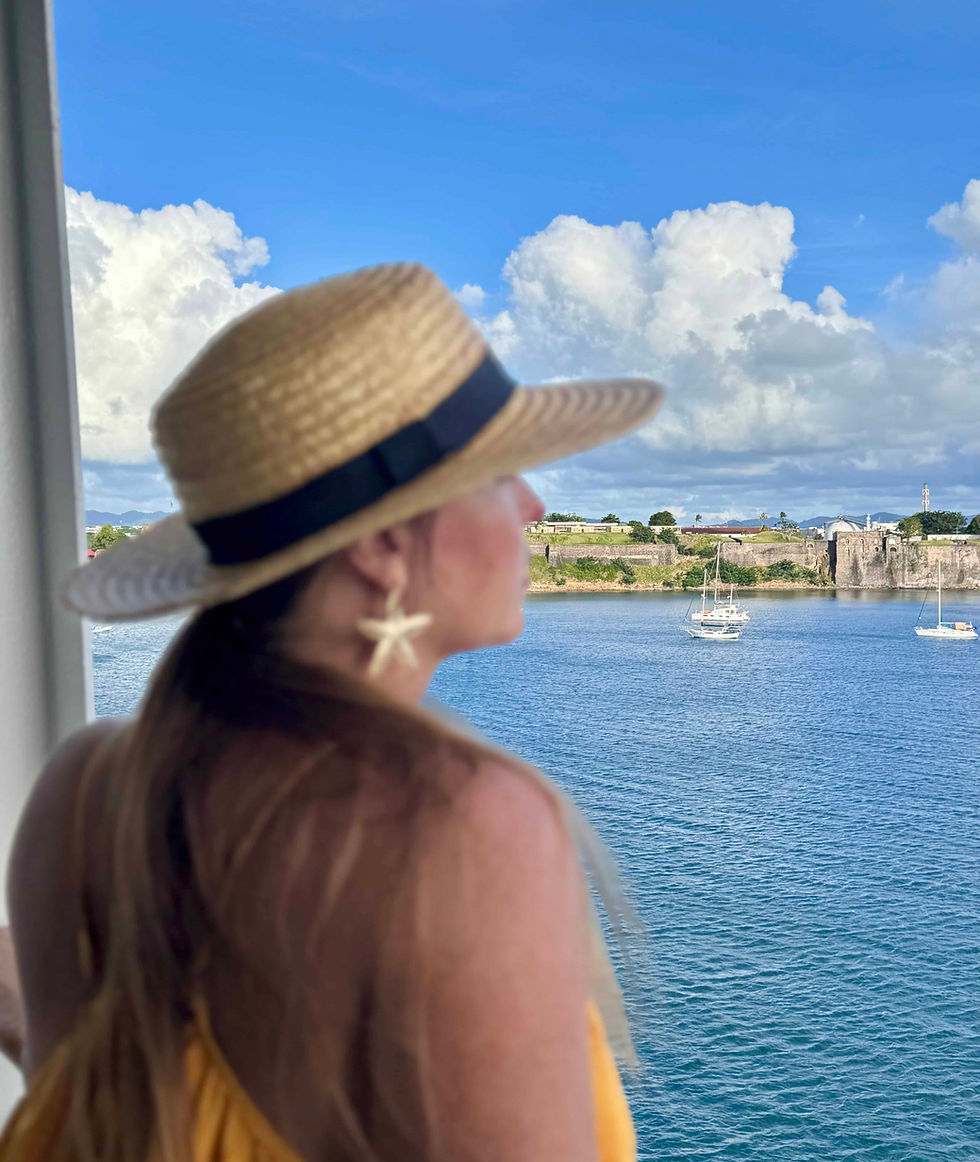
Fun facts: The bay hosts many sailing races and even the world’s largest yole sailboat races every July–August. Martinique is famous for its agricole rum, made from sugarcane juice rather than molasses.
Practical must-know tips
Explore the capital on foot if time is short, everything is compact and walkable from the port.
If you have more time and book a tour, head to the north for black-sand beaches and hike the mountain to get to the most beautiful viewpoints over the island in a tropical setting.
Visit a rum distillery if you have extra time, book in advance for tastings at places like Habitation Clément.
As it’s a tropical island mosquito spray, especially when you go inland, is a must.
Carry Euros and expect higher prices than in the Dutch islands, it's French territory.
On this French island you will have European phone data coverage!
Want to stay longer to explore more? Then make sure to check these overnight stays on Martinique.
Antigua & Barbuda: beaches & forts
On our 5th day we arrived in Saint John’s, the vibrant capital of Antigua & Barbuda. A colorful town in a deep natural harbor surrounded by nice shops and restaurants. One of the most popular attractions on Antigua are the beaches, as the island has 365 beaches, one for every day of the year!

We decided to walk to Fort James (1690s) from the ship, located on a cliff with a beach below it. This was an hour’s walk and a 15-minutes’ drive northwest of town, surrounded by an authentic neighborhood that gave a good insight into the island's spirit.

The Fort is a quiet ruin, free to visit with weathered cannons, thick stone walls, and panoramic views of the cruise-ship dock and turquoise sea, which make it quite a photogenic viewpoint.
Fort James Beach is a relaxed stretch of soft sand with calm, clear water ideal for swimming and paddle-boarding with beach chairs and umbrellas. There are a few beach bars here as well, like Millaz, Thirty Six 5 and Treehouse beach club with that authentic vibe. Get an impression of the Fort and the beach via these pictures:
After our visit we decided to take a taxi back for just $5 p.p to Saint John’s with its lovely Creole and colorful buildings. A nice town and cruise terminal to explore on foot as well.
Practical must-know tips
You can easily book a tour in the harbor or take a taxi for more privacy.
Walking around the colorful capital Saint John’s is nice, with many shops and restaurants, but if you want to venture further, I don’t recommend walking too far, as the heat can be intense, and taxis are affordable and plentiful here.
If you’re into history, Nelson’s Dockyard in English Harbor is a UNESCO site with preserved 18th-century naval buildings, about a 30-minute drive from Saint John’s.
For pure beach time, head to Dickenson Bay or Jolly Harbor for calmer waters and more facilities.
If you have more time, you can also take a ferry/catamaran of Barbuda Express from Saint John’s harbor to Barbuda. This takes about 90 minutes to reach even more pristine beaches on this quiet island, including a pink sand beach and a bird reserve.
Bring cash (Eastern Caribbean Dollar or USD), as some beach bars and small shops don't take cards.
If you want to stay on these islands a bit longer, check the best Antigua & Barbuda accommodations here.

St. Maarten: dual cultures & vibrant activities
St. Maarten (Dutch side) and St. Martin (French side) is the only island in the Caribbean split between two nations, peacefully coexisting for centuries. The Dutch (southern) side is lively with nice beach clubs, nightlife and entertainment.
While the French (northern) side offers gourmet dining and chic boutiques. We spent the day exploring both sides with a private guide.

The must-do here is Maho Beach for plane-spotting at Princess Juliana Airport. Planes fly incredibly low over the beach, creating that iconic thrill (just don’t stand too close with the departing planes, for the jet blast!).
We also had a nice lunch near Maho beach at D’s Beach Bar Grill with delicious casual dishes and stunning sea views. There’s also a plane viewing platform on the other side of the bar, facing the airport, great for plane-spotting, if you want to avoid the Maho Beach crowds!


We drove past Orient Bay on the French side, a long, white sand stretch, ideal for swimming, windsurfing, or lounging at beach clubs. And Grand Case, the ‘gourmet capital’ of St.Martin, with nice restaurants and lolo's (open-air food stalls), serving fresh grilled lobster and fish, and of course the local johnny cakes.
Other highlights on the French side are Pinel Island, easily reached by ferry from Cul-de-Sac. And of course, in Marigot also the lolo’s, Fort St.Louis, guavaberry tasting at Colombier Tradition. And the French market here should not be missed for fresh baguettes and cheese.

On the Dutch side Simpson Bay is perfect for mega-yacht watching, delicious casual restaurants and vibrant nightlife. And Philipsburg has a vibrant Boardwalk and Front Street, the place to be for duty-free shopping, with jewelry, electronics, and liquor at sharp prices,

Fun facts: The island hosts the Heineken Regatta (world-famous sailing event) start March and don’t miss the epic Carnival celebrations, held on the French side in February and on the Dutch side from end of April to May.
You can check this St.Maarten blog for all details and everything you need to know for your 2026 (Carnival) visit.

Sint Maarten is a true melting pot of Dutch, French, Creole, and international influences and has more than 300 top-notch restaurants on both the Dutch and French side. Find all my tips for an optimal culinary visit of St.Maarten in this restaurant and nightlife blog.

Practical must-know tips
You can easily book a taxi or tour from the port, but can also walk to Philipsburg from the cruise terminal in about 15 minutes.
Do note that there are some shops at the cruise terminal, but make sure to walk on all the way to Philipsburg via Jewelry Avenue to get to Front Street.
If you also want to visit the French side, booking a taxi or tour is essential.
As the road can get clogged up with traffic, I recommend booking a private tour or taxi for more flexibility. Just make sure to reserve enough time to get back to the ship, as traffic jams can be intense here, especially when there are multiple cruise ships docked at the same time in high season.
Bring USD or Euros, both are widely accepted, but USD is easier on the Dutch side.
Visit Maho Beach early, crowds peak midday, and the wind from planes is strong.
Crossing to the French side means you will have European phone data coverage, just don't forget to turn it off again when you cross back to the Dutch side!
For more tips, check my full St.Maarten travel guide from my May 2025 visit.
Want to stay a few nights to explore more of both sides? Then check these unique accommodations on St.Maarten.

Tortola-British Virgin Islands: secluded paradise island
The British Virgin Islands (BVI) consist of over 60 islands and cays with about 150 beaches, many of them pristine and uncrowded.
Tortola is the main island, with Road Town as the capital and a major yachting hub.
We booked an open-air jeep tour through the ship, looping the west side from Road Town, with many scenic viewpoints and a stop at Cane Garden Bay.


While we enjoyed the views along the way, and from above by drone, this particular beach is beautiful with calm waters, yet also felt crowded and overly commercial with its abundance of ugly beach chairs. Great for people-watching but not for tranquility.
Next time, I’d rent a local taxi to visit quieter gems, like Smuggler’s Cove (secluded, snorkeling with sea turtles), Long Bay Beach (windsurfing paradise), or Apple Bay (surf spot).

Fun facts: The BVI is a top sailing destination with clear turquoise waters, protected bays, and world-class diving. The islands are known for their British influence (driving on the left), rum distilleries like Pusser’s, and the infamous 'Painkiller' cocktail.
With generally fewer cruise ships than other Caribbean spots, Tortola still has a laid-back, exclusive feel.

Practical must-know tips
Road town harbor is vibrant and offers some nice shops and restaurants, however most of the beauty of the island is further away. Therefore, booking a tour, a private taxi or renting a car for flexibility is recommended, as public transport is limited.
Tortola is easy to drive around in just 1,5-2 hours, as it’s quite small, but interesting to explore with amazing views.
Just remember to drive on the left and roads are winding and steep, so take it slow.
You can also book a boat tour via the ship the visit several of the other islands as Tortola is surrounded by them, many with even nicer beaches!
Bring USD (official currency) and cash for beach bars, as cards aren't always accepted.
Pack reef-safe sunscreen and mosquito spray.
If you want to stay on these islands a bit longer, check the best BVI hotels here.

Bonaire: diver’s dream & flamingo haven
The quiet ABC island with turquoise waters, flamingos and salt flats.
We did a private day tour here that looped north-south. We drove over the scenic ‘Toeristenweg’ past many iconic spots like 1000 Steps, actually just 72 stairs to get to the reef with turtles.
Past the nearby balcony, Landhuis Karpata and many other quiet shore diving sites, to Rincon village for a local meal at Posada Para Mira, which is a must.

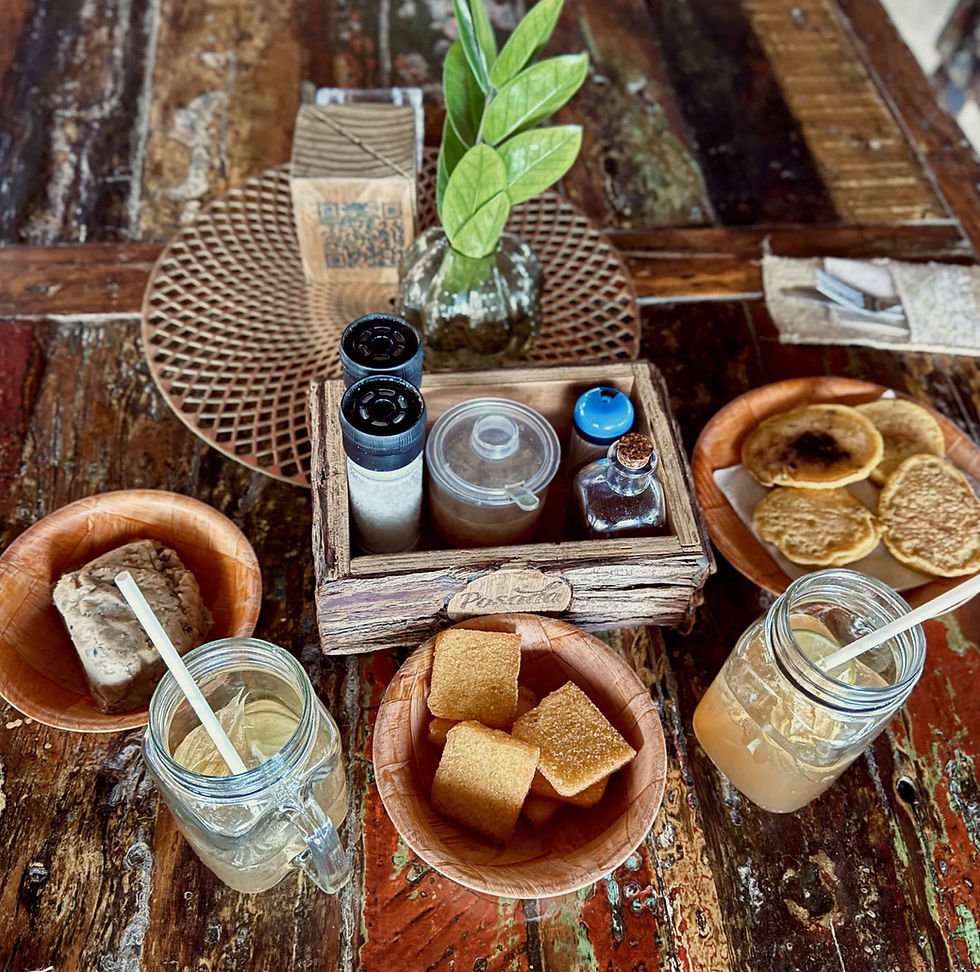
From Rincon, the oldest village of the island, we drove to Goto Lake to spot flamingos, to the Seru Largu viewpoint, highest point of the island, all the way to the salt flats and pyramids of Cargill in the south in just a few hours. Past the flamingo nature reserve, the historic slave huts and Willemstoren Lighthouse to the bright blue waters of Lac Bay with its surfing schools and beach clubs.


Here you can eat in style at Sorobon Reef Bar and Sebastian’s Beach or have a casual meal and chill at the laid-back Hang Out Beach, just take your pick!
Bonaire is big on sustainability and has a beautiful nature reserve: Washington Slagbaai, in the west and an extensive protected marine park since 1979, that also includes Klein Bonaire just off the coast.
You can easily visit Klein Bonaire too for a few hours by ferry from Kralendijk. And of course, a walk through this colorful capital, with its many atmospheric shops and restaurants should not be missed either!
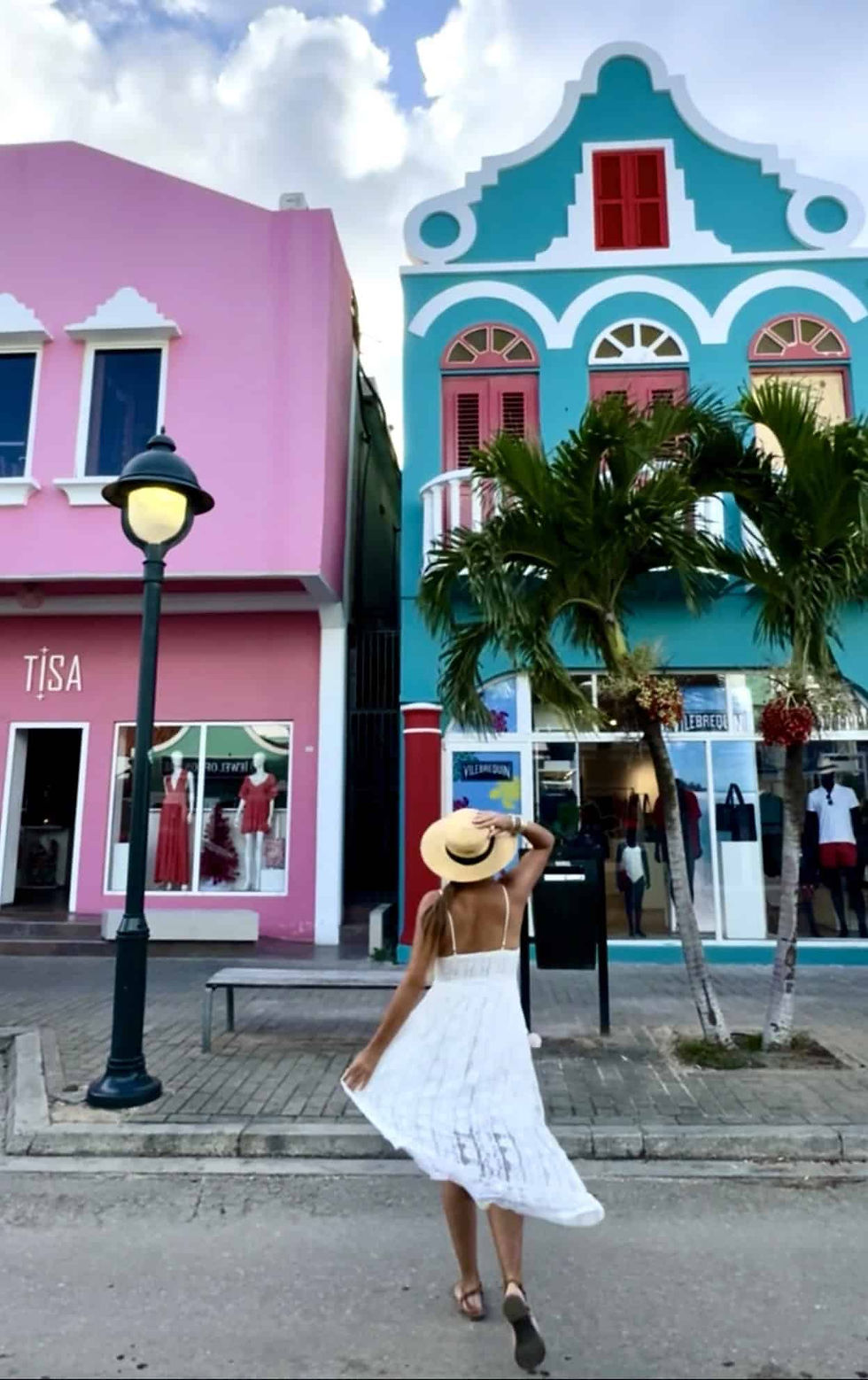
Fun facts: the island has nearly more flamingos than people, and more than 80 dive sites with unique shore diving spots. All of them easy to find as every site along the coast is marked with yellow rocks.
Practical must-know tips
Bring water shoes, as there are not many sandy beaches on Bonaire, most are rocky, lined with coral and the most popular spot: 1000 Steps, also has sharp rocks.
Bring your own snorkeling equipment if you want to explore the underwater world on your own with ease.
Pack reef-safe sunscreen and mosquito spray.
Bring USD, the official currency of Bonaire.
Rent a car or book a guided tour, the island is best explored by road to hit all the highlights and public transport is almost non-existent.
As car rentals for just 1 day can be quite expensive you can also rent golf carts from $45 a day to drive all around the island in just a few hours. Just note that you cannot access the National park without a 4x4. Find more info about golfcar rentals here.
For more tips, and many other restaurants, hotels and hotspots on Bonaire, check my extensive 2024 Bonaire travel guide.
And if you want to stay on this tranquil Caribbean island for a night or 2 check these hotels on Bonaire.

This Caribbean cruise was pure perfection, super convenient, with new adventures daily, epic views, delicious meals and endless entertainment. If you want to see as much of the Caribbean as possible without the hassle of extra transfers, unpacking and additional costs, this is the way to go.

And the best thing is that you will get to discover many hidden gems, islands that would usually be overlooked as they are harder to get to or too small to take the effort to fly to. Find even more inspiration for this beautiful region on my Caribbean page.
And I hope that my ultimate Caribbean islands travel guide will help you get the most out of your visit to either, or all, of these Caribbean islands, whatever way you decide to travel.


Comments